
Work Underway On New McKenzie River Substation
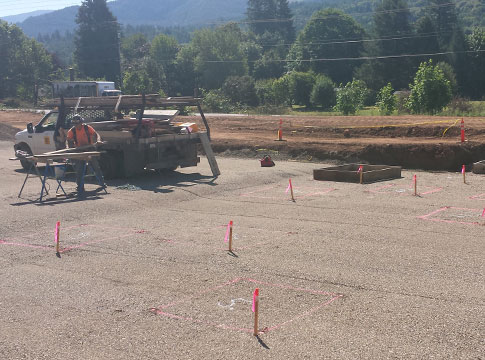
Work is underway on a new, 115-kilovolt substation on 31 acres off of Holden Creek Lane and the McKenzie Highway.
The $5.8 million project will eventually replace the Leaburg Substation, which was built in the early 1930s and sits next to our Leaburg Powerhouse. The new substation will be located about 1/4 mile west of the existing Leaburg Substation.
The new Holden Creek Substation will improve the resiliency of our McKenzie River transmission system, save money and offer better environmental protection for the river, said Philip Peterson, an EWEB senior engineer.
When the Leaburg Powerhouse was completed in 1931, the 69-kilovolt substation was built adjacent to it along the river. By building a new substation about 1,000 feet to the west and farther away from the river, we eventually will be able to decommission the old substation and remove the transformers, which collectively hold about 11,000 gallons of mineral oil.
Along with the benefits of being located farther from the river, the modern transformers at the Holden Creek Substation will be filled with FR3 fluid, an environmentally friendly vegetable oil.
When construction work on the new substation is finished in the first quarter of 2018, it eventually will tie into the Bonneville Power Administration's transmission line, which runs adjacent to the Holden Creek property. That connection is expected to occur next summer or fall.
Once connected to the BPA transmission lines, we will be able to remove most of the old Leaburg substation. In the years after, we will be able to remove about 14 miles of transmission lines that run between the Leaburg and Walterville generation facilities.
"The removal of the transmission lines between Walterville and Leaburg will include all of EWEB's transmission lines that are visible from Highway 126, including the legally installed, but somewhat disconcerting lines that cross over the Walterville Elementary School activity fields," said EWEB senior engineer Richard Jeffryes, the primary designer of the project.
"Once those lines are gone, kite flying at the school will be much enhanced," Jeffryes said.