
A small number of McKenzie Valley EWEB customers face higher February bills due to estimated reads
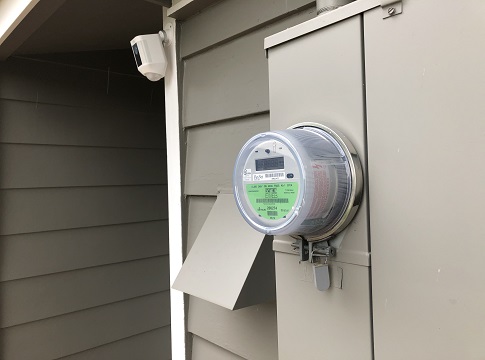
A confluence of factors is driving EWEB customer bills to reach unusually high levels for a small percentage of customers in the utility’s upriver service territory.
A planned rate increase took effect in February, adding $5 per month to the flat, basic charge and a small – 1 cent per kilowatt hour – to the usage rate. EWEB’s Board of Commissioners approved the rate increase to pay for critical investments in electric infrastructure and to begin to catch up with the rising costs of providing electricity that have far surpassed EWEB’s rate adjustments.
But for approximately one-fifth of customers upriver, the most significant contributing factor might have been that EWEB could not read those customers’ meters in either December or January.
In December, EWEB estimated the energy usage of 22% of upriver customers due to a windstorm that caused outages and blocked access to certain meters. In January, EWEB estimated the energy usage of 18% of upriver customers due to resource allocations and constraints. Usage for approximately 6.5% of upriver customers was estimated in both December and January.
When EWEB read the meters of those customers in February, the actual usage came in higher than estimated. In February, customers then needed to pay the difference between the estimated bill amounts and the actual amount due for the prior month or months.
When EWEB is unable to read a customer’s meter, the utility estimates usage based on the same month one year prior. EWEB did not need to estimate bills of customers in Eugene.
Smart meters, which EWEB will begin installing upriver later this year, will greatly reduce the need for meter estimations.
“We only charge customers for the energy that they actually use. Sometimes, in the short term, we need to estimate usage because we can’t get an accurate meter read. This is a standard practice for utilities,” said EWEB Chief Customer Officer Julie McGaughey. “But we know it’s hard for customers to budget when a bill is higher than the previous one. That’s why we have payment plans and other options for customers who need it.”
Customers can take advantage of EWEB’s payment plan system if they need to spread the payments out over a longer period. Customers should call EWEB at 514-685-7000 and speak to a customer service representative to discuss their options.
“We’re working with customers on a case-by-case basis to find solutions to manage the higher bills, including by spacing out payments. We encourage customers who need tailored solutions to reach out to Customer Service,” McGaughey said.
Cold weather drove energy usage to record levels in January and February.
Bills were higher than expected because of cold weather that drove community-wide energy usage to record-setting levels. In late January, demand for electricity in EWEB’s service territory reached the highest levels of the winter to that point, with demand peaking at 475 megawatts on Jan. 28.
Just two weeks later, demand for electricity surpassed that level, topping out at 493 megawatts on Feb. 12. That level of demand was the highest that EWEB has seen in nearly a decade.
During both the January and February cold snaps, overnight low temperatures dipped into the low 20s. When that happens, electric heating systems work overtime to keep homes warm, resulting in higher energy usage, even if customers leave thermostats untouched.
As temperatures drop, customers’ bills rise. For instance, when the average temperature falls from 65 degrees in October to 48 degrees in January, a typical home with electric resistance heat that sets the thermostat at 68 degrees will see a corresponding rise in electricity usage from 830 kilowatt hours to 2,400 kilowatt hours. This would result in a bill increase from $111 to $272.
For customers with larger homes or poorly insulated homes, or who set the thermostat higher, that energy usage would rise even higher when the mercury falls.
Smart meters will reduce the need for estimations.
For the last several years, EWEB has been installing smart meters for customers in Eugene, eliminating the need for meter readers to drive to each house – and greatly reducing the need for estimations.
The rural nature of EWEB’s upriver service territory has posed extra obstacles to installing smart meters upriver, but smart meter installation will begin upriver later this year. This will allow EWEB to gather accurate information about energy usage every month, except under rare circumstances.
“Smart meters won’t completely eliminate the need for estimations, but they will dramatically reduce their frequency,” McGaughey said.