
Cold temperatures this week drive highest electricity demand of the winter so far
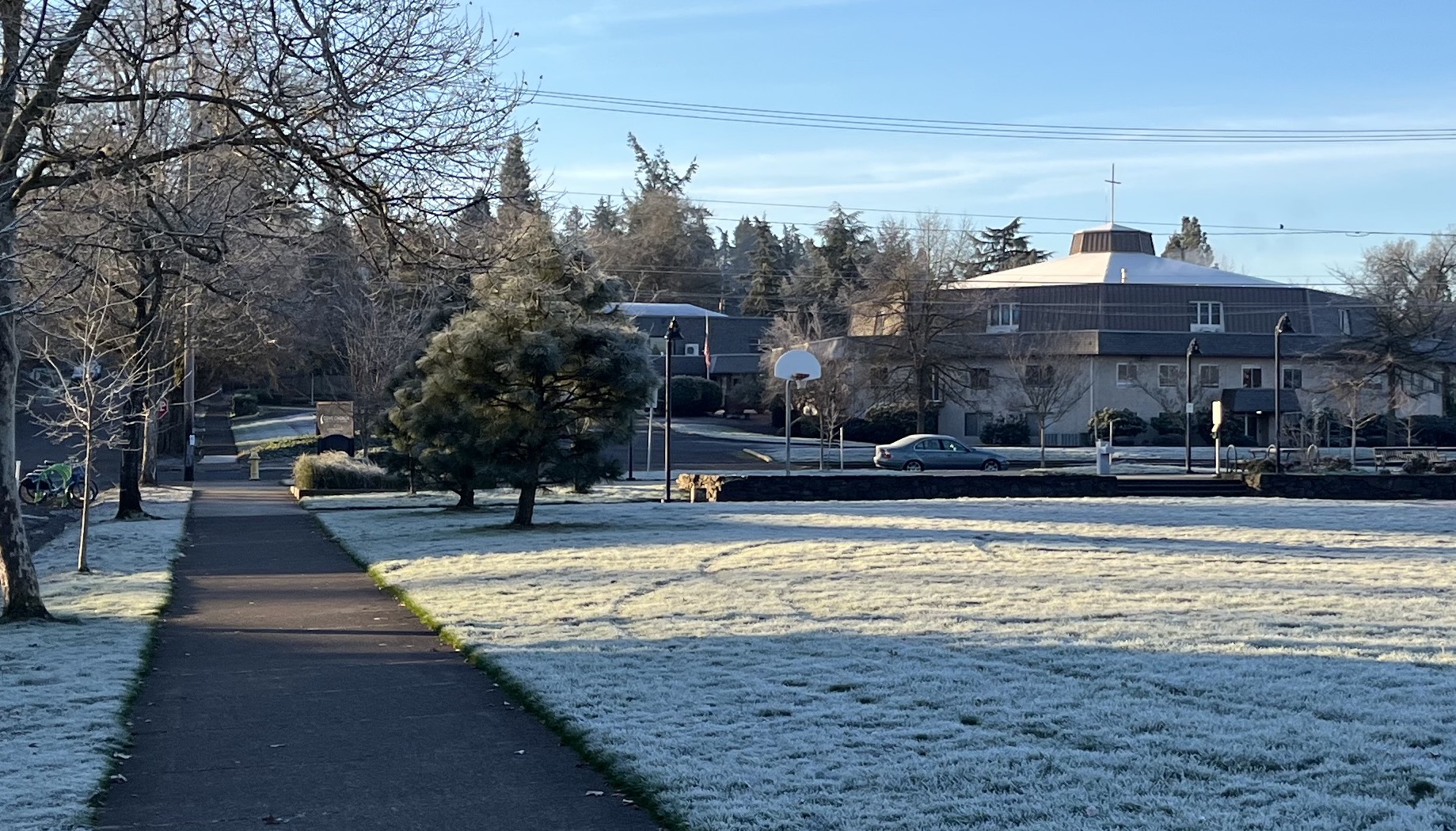
Frosty conditions in Eugene this week have driven electricity demand to the highest levels so far this winter as heaters strain to keep homes and businesses warm.
Natural gas heaters have also been working overtime to ward off winter’s chill.
On Thursday, Jan. 22 at 9 a.m., demand for electricity from the Eugene Water & Electric Board (EWEB) hit 453 megawatts, the highest level of the winter so far. Temperatures that morning hovered around a shiver-inducing 20 degrees.
Electric heaters — especially efficient electric heat pumps — powered by EWEB’s 90% carbon-free electricity — are still the cleanest way to heat homes throughout the year. Average demand over the course of the year is typically much lower, at around 275 megawatts. Mild weather conditions correspond with low energy demand as heaters turn off.
The peak demand this week falls short of peak moments in recent years. In 2025, electricity demand topped out at 493 megawatts on Feb. 12, when temperatures dipped to 22 degrees. In 2017, energy demand soared to 524 megawatts on Jan. 6, when low temperatures dropped to 13 degrees.
But the highest moment of electricity demand in EWEB’s history occurred on Dec. 9, 2013, when temperatures plummeted to a bone-chilling -10 degrees and demand hit 557 megawatts.
The highest energy demand of the year almost always occurs in January or February, when temperatures are their lowest and cold fronts bear down on the Pacific Northwest. The overnight lows are the primary driver of peak energy demand, which tends to occur in the early morning hours. Extended cold snaps push demand even higher as homes never get a chance to fully warm up.
Normally, high energy demand corresponds to high energy prices on the wholesale energy market. However, so far this winter, wholesale energy prices have remained low. A rainy start to the winter filled rivers and reservoirs on the Columbia River hydropower system, where EWEB gets most of its energy, yielding a high supply of electricity and low wholesale prices.
But warm conditions early this winter limited snowpack accumulation in the mountains that feed those rivers. If little snow falls this winter, hydropower could be limited later this year, constraining hydropower supplies.
Region-wide energy shortages could occur under extreme conditions.
An extended cold snap during a dry year could cause regional energy shortages, according to a study published by the consulting firm Energy and Environmental Economics. With hydropower supplies still abundant this year, the risk of a shortage is currently low.
The study was commissioned by the Public Generating Pool (PGP), a trade organization of which EWEB is a member, as well as more than a dozen other Northwest utilities and power producers.
If a dry year constrains the region’s hydropower resources and an extended cold snap causes energy demand to soar, the shortfall in the Greater Northwest — a region encompassing Oregon, Washington, Idaho, Montana, Wyoming and parts of a few other states — could reach 1 gigawatt in 2026.
By 2030, the shortfall in the Greater Northwest could soar to 9 gigawatts, or roughly the electricity demand of the entire state of Oregon. In just Oregon and Washington, the projected shortfall is 5 gigawatts by 2030.
Under these conditions, a shortage could last for several days. The key to making it through those cold snaps will be managing peak demand and efficiently using energy.
Electrification continues to be an important part of reducing emissions and climate change impacts. But it is important to use energy wisely, especially during periods of peak demand.
“There is only one way for us to prepare for and overcome this challenge, and that’s by working in partnership,” said EWEB Chief Energy Resources Officer Brian Booth, who is also the volunteer treasurer of PGP. “During those rare moments when the power system treads close to the edge of crisis, we will lean on each other. We’ll need to turn on the last-resort power plants. We’ll need to lean on partnerships with large customers to manage supply and demand. And we’ll need residential customers across the board to pare back where they can until the crisis passes.”