
Water use in summer more than twice as high as winter
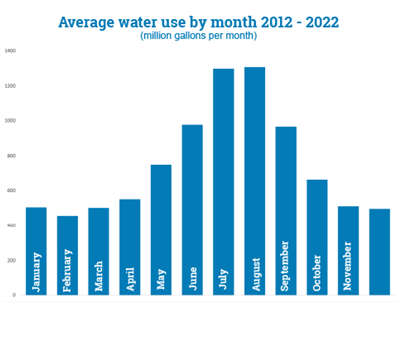
EWEB customers use more than twice as much water in the hot, dry summer months, compared to the cold, rainy winter months.The higher summer water use can almost assuredly be attributed to customers watering their lawns and gardens.
During the wet winter months from November to March, when water use is limited to indoor uses such as drinking, bathing and doing laundry, EWEB customers collectively use about 500 million gallons of water per month. As the temperatures rise and the rain dries up during the spring, EWEB’s customers gradually use more water.
During the hottest, driest summer months of July and August, when people are watering their lawns and other outdoor landscaping, water use crests above 1,200 million gallons or even 1,300 million gallons per month. Then, as the temperatures drop and the rain returns, water use drops back to its winter low.
“Though we don’t know precisely what customers use water for, we can estimate that winter water use reflects just indoor use, since customers aren’t watering lawns or other landscaping,” said Mike Masters, EWEB water operations manager. “A variety of factors may be at play, but the higher water use in the summer most likely reflects customers using water for irrigation – whether that’s lawns or other landscaping.”
“We always encourage our customers to conserve water and we have resources available to help them,” Masters added. “During the summer, customers can receive weekly watering recommendations to optimize their water use. We also have rebates for low-flow toilets and tips for how to save water at home. And, of course, always be on the lookout for leaks.”
- If you have an underground sprinkler system, turn it on and run through each station, checking for obvious leaks. Make repairs quickly to ensure sprinkler efficiency. A leak can cause a large increase in your water bill, so addressing early in the watering season can save big!
- Watch where you are spraying; are you accidentally watering the driveway, house, road or sidewalk instead of the yard? Redirect sprinklers so they only water the landscaping.
- Aerate your lawn so that water applied by a sprinkler or rainfall drains into the soil, instead of running off into the street.
- Place mulch or compost on shrubs and perennial beds on top of a soaker hose or other drip watering methods This holds the water in the soil reservoir for the plants to draw from over time.
- Place mulch around your trees instead of allowing grass to grow. This is one of the best ways to maintain soil moisture for the tree roots, reducing the amount of water needed at each watering. Bonus, it also reduces mower damage to the tree!
- Take advantage of naturescaping. Naturescaping is a method of landscaping that seeks to incorporate native plants and reduce water use. It is easier to maintain and can save both time and money. Checkout the Water Wise Demonstration Garden at Alton Baker Park.
- Sign-up for weekly watering recommendations. You'll get a watering tip and recommended amount of water in your inbox each week for a happy healthy lawn.
Related Programs
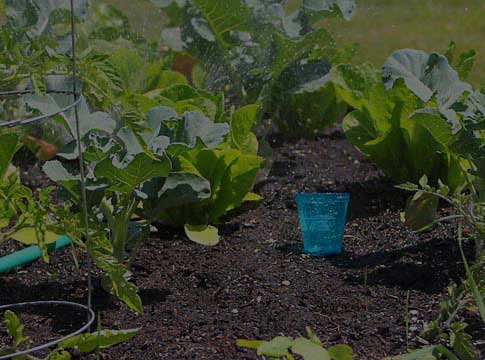
Give your yard or garden just the right amount to drink.
Sign up for weekly watering recommendations for your yard and garden.
Save water
When you save water, you lower your bill while also protecting our environment. Fortunately, there are many simple ways to conserve this precious resource.