
EWEB leverages Oregon Clean Fuels Program to support electric mobility
EWEB has leveraged Oregon Clean Fuels credits to give grants supporting electric mobility to five organizations in the Eugene area.
The Oregon Clean Fuels Program is administered by the Oregon Department of Environmental Quality. EWEB generates Clean Fuels credits based on how many electric vehicles are registered in the utility’s service territory. EWEB then uses the funds from the sale of those credits to support electric transportation in the community.
The awardees of the EWEB grants were eligible to receive up to $30,000 each to cover 100% of eligible costs studying, planning, promoting, or deploying electric transportation technology and projects. This year’s awardees are using the grants to purchase EVs to transport homeless youth, to support a bike share program’s fleet maintenance and to add an EV offering to a community college motor pool, among other projects.
EWEB solicited proposals in early 2024, reviewed them, selected the top proposals, and disbursed the grants by the end of 2024. EWEB gave special consideration to projects that would help promote electric mobility in underserved communities, including areas without ample access to public charging.
The annual grants, which EWEB launched 2022, provide funding to nonprofits, academic institutions or public organizations to provide financial assistance to their electric mobility projects.
EWEB received seven proposals all of which were carefully considered by the grant committee and scored on project feasibility, use of funds, innovation and analysis, social equity and their education, environmental and community benefits. EWEB awarded grants to Cascadia Mobility, Lane Community College, Looking Glass Community Services, Pacific Refugee Support Group and Shift Community Cycles.
“For many community organizations, especially nonprofits and service providers, an electric vehicle is financially out of reach,” said EWEB’s Juan Serpa Muñoz, who oversees electric mobility efforts for EWEB. “But EWEB can leverage Clean Fuels credits to help these organizations and give them access to electric mobility in ways that allow them to better serve their communities.”
EWEB provided feedback on proposals that were not selected, and encouraged the organizations to re-apply for the 2025 Electric Mobility Grant after updating their proposal. EWEB will begin accepting applications for the 2025 Electric Mobility Grants on Earth Day, April 22. Those interested in applying for a grant and would like more information, are invited to sign up receive program updates at eweb.org/electric-mobility-grants.
Cascadia Mobility
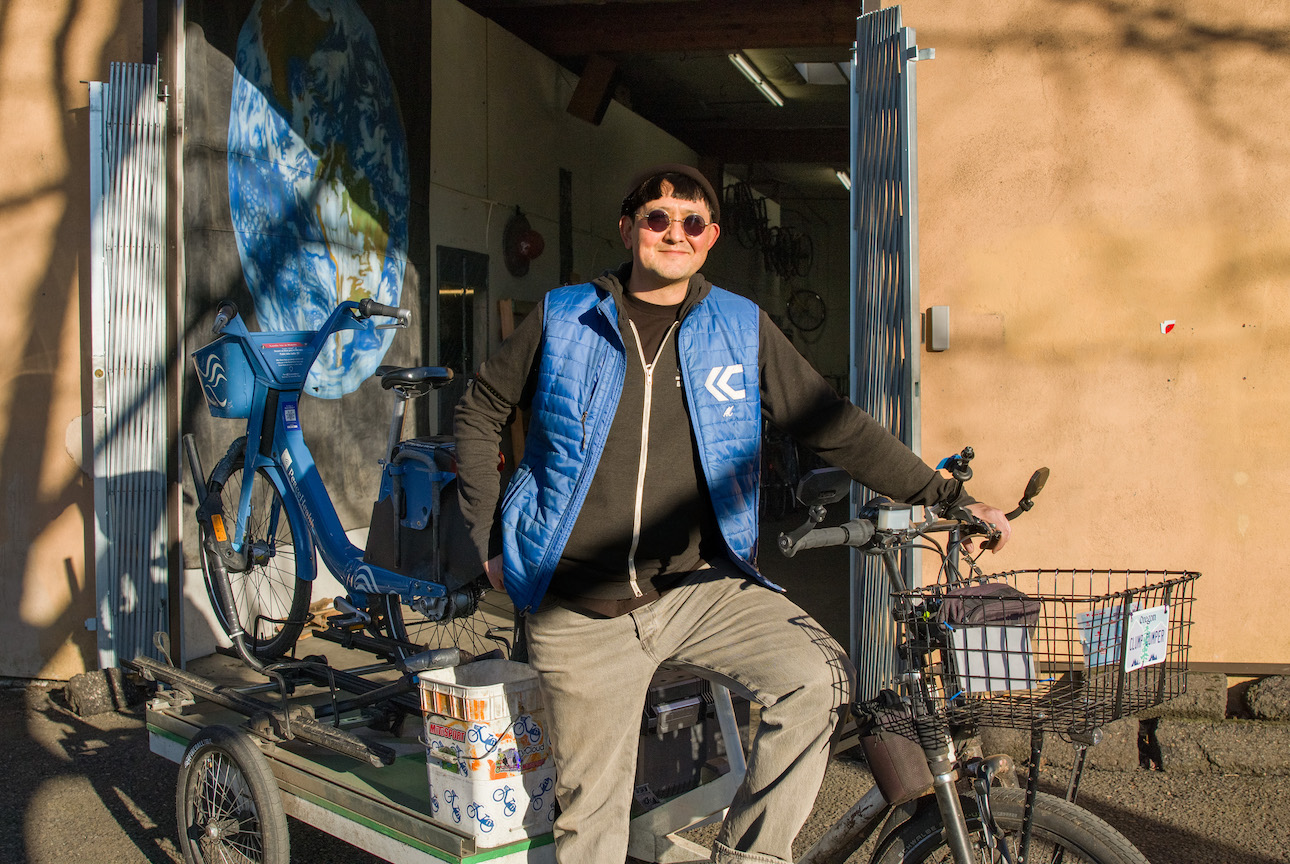
Cascadia Mobility, the nonprofit operator of Eugene’s bike share program PeaceHealth Rides, was awarded $30,000 to be used to purchase an electric van to support the bike share program’s fleet maintenance and repair.
“The electric mobility grant has been instrumental in helping us outfit ourselves with some really world class equipment. In 2023, we purchased two electric tricycles and two e-bikes. And in 2025 we’ll be purchasing an electric van,” said Al Hongo, Cascadia Mobility operations director. “Not only did the trikes and the e-bikes help reduce motor vehicle miles traveled, they're more effective instruments for some of the work that we do.”
This is Cascadia Mobility’s second Electric Mobility Grant. They were awarded $25,000 in 2022 to purchase electric pedal assist tricycles. Cascadia Mobility is able to do much of their field work using the electric trikes. However, large-capacity commercial vans are necessary to complete the work. With the recent expansion of the bike share program from 300 bikes to 450 bikes, expanding the program into new areas in Springfield and Eugene, and goals to expand their program further within the next several years, there will be an ongoing need for a large commercial vehicle.
Lane Community College
Lane Community College was awarded a $30,000 grant to fund the purchase an electric vehicle for their motor pool fleet. The fleet currently has 14 vehicles: seven sedans and seven passenger vans. None of these vehicles are electric. LCC plans to add one electric vehicle sedan to the current fleet to be used for trips with less than four occupants.
“We've been wanting to go with an EV for a while to get started using the technology for our staff travel, but we were not able to fund it. Thanks to the grant, we were finally able to get one electric vehicle in the motor pool,” said Luis Maggiori, the sustainability coordinator at LCC.
This is also LCC’s second electric mobility grant. They were awarded $25,000 in 2022 to support the installation of a dual pedestal level 2 charging station on their main campus.
LCC feels that in order to promote and advocate for further community adoption of electric vehicles they need to lead by example. They intend to offer electric vehicle test drive events for campus students and staff, as well as add informative decals to the electric motor pool vehicles to raise community awareness and visibility.
Looking Glass Community Services
Looking Glass Community Services – which provides help to Lane County’s youth, adults and families through an array of individualized support – received a $30,000 grant to fund the purchase of an electric vehicle for their New Roads Program. The New Roads Program is a drop-in center and alternative school to assist homeless youth.
Looking Glass intends to use the vehicle for several activities, including transporting youth to appointments, picking up donations from FOOD for Lane County, staff who provide street outreach and additional work-related errands.
“This is for our homeless youth program, and we're excited about that. With this, we're able to drive around and meet the youth where they're at, deliver goods to them,” said Tyler Mack, the vice president of marketing and development at Looking Glass. “And that vehicle can help them. We'll have it to help them move in and out of their apartments, get to job interviews.
Looking Glass was awarded a $33,000 electric mobility grant in 2023 to purchase an electric vehicle and level 2 charging station for their Center Point School to provide transportation for similar errands and tasks.
Shift Community Cycles
Shift Community Cycles received their second electric mobility grant as well. In 2022, they were awarded $25,000 to support an e-cargo bike loan and education program. Shift Community Cycles will use their 2024 grant award of $13,766 to expand the use of e-bikes for community outreach, bike repair stations and group rides.
“Empowering cyclists and the underserved communities of Lane County is our primary mission,” says Jim Nevada, president and founder of Shift Community Cycles. “Our programs provide access, education and outreach to build a strong community and a sustainable future.”
Pacific Refugee Support Group
This was the first year Pacific Refugee Support Group applied for an electric mobility grant. Pacific Refugee Support Group provides services to the refugee, asylum seeking and newcomer community. The organization was awarded $30,000 to purchase an electric vehicle to aid in providing transportation to make programs more accessible to everyone they support.
Related Programs

Green Options
As an EWEB customer, you’re already using clean, renewable energy and investing in McKenzie Watershed protection. If you're looking to do more, Green Options may be right for you.
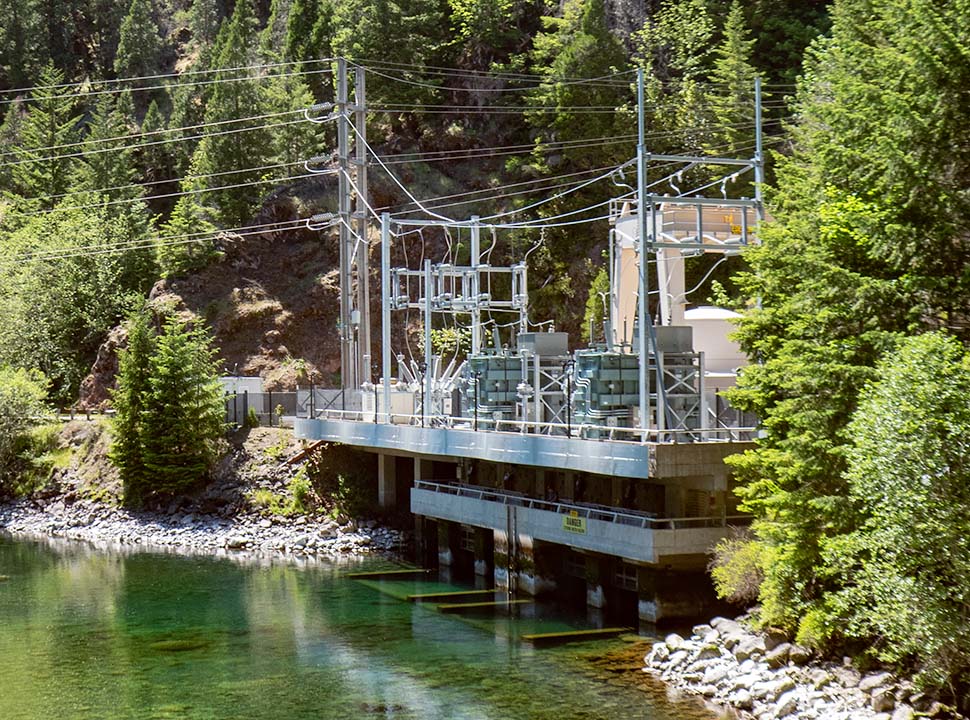
Our power supply
Learn more about where your electricity comes from.
Forth Mobility
Electric vehicle information, resources, events and an EV showcase.