
Energy needs are changing across the northwest, and that's largely a sign of progress. Electrification of homes, vehicles, and businesses is one of the most effective tools we have for reducing greenhouse gas emissions across our region.
But meeting growing demand for clean energy requires planning on multiple fronts. To understand the resources, technology, and infrastructure that will be needed to meet customers' future electricity needs, we are actively exploring questions such as:
- How will the demand for electricity change over time?
- What power resources will best serve the long-term needs of our community?
- How will we meet our climate commitments?
- What investments are needed to maintain a resilient, reliable grid?
- How can we partner with customers and others across the region to maintain clean, reliable, and affordable energy?
Bonneville Power Administration (BPA) product choice
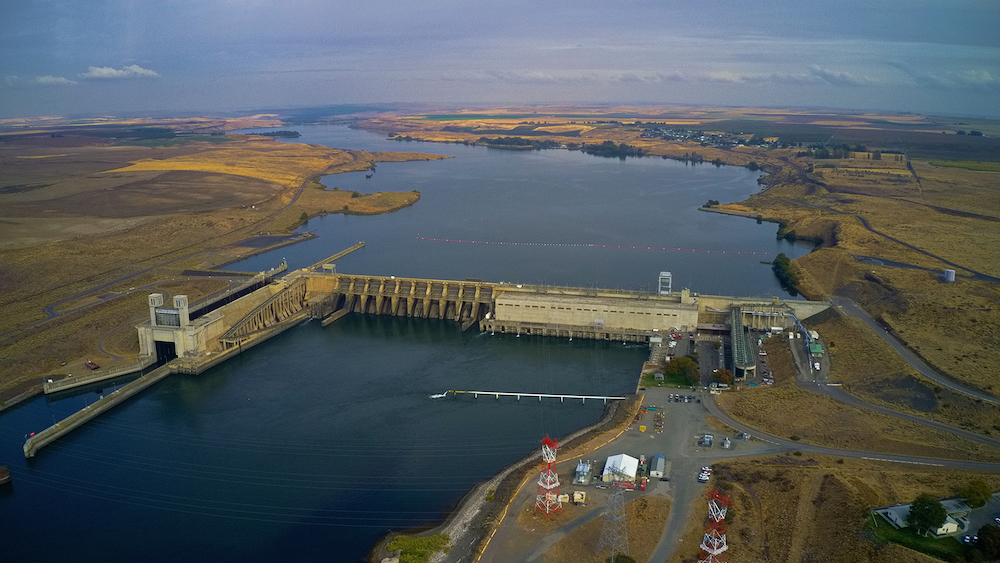
In 2023, EWEB worked through an Integrated Resource Planning process to weigh the tradeoffs between different energy resources the utility could procure to meet customers’ energy needs. The process resulted in several action items to conduct additional study and had one especially firm conclusion: BPA hydropower was the best option to continue to form the foundation of EWEB’s energy resource portfolio.
In 2025, we signed a new contract with the BPA that runs through 2044, securing access to between $2.5 and $3 billion worth of energy.
When we looked closely at the costs, we found that combining this BPA contract with strong partnerships with our customers—through energy efficiency and conservation programs— can help keep costs lower over time than relying on BPA for all of our power.
Our contract with BPA:
- Saves money compared to full reliance on BPA
- Ensures long-term access to clean, reliable power
- Provides flexibility to leverage local generation as needed
- Trusts EWEB customers to conserve and use energy efficiently, especially during peak times
Electrification
Electrification refers to replacing technologies that run on fossil fuels, such as gasoline vehicles and natural gas heating, with electric alternatives powered by clean energy. In Eugene, where about 90% of EWEB's power comes from carbon-free sources, electrification is one of the most effective tools our community has for reducing greenhouse gas emissions. Gas-burning cars account for over 50% of local greenhouse gas emissions while burning methane natural gas accounts for nearly a third. Vehicles and buildings powered by EWEB’s 94% carbon-free electricity have almost none.
Starting in 2020, EWEB conducted a two-phase study to understand how widespread electrification would affect our community's electricity demand, our power supply, and our local infrastructure. The study focused on light-duty vehicles and space and water heating — the technologies most likely to shift in the near term.
Key findings included:
- Eugene residents could reduce community carbon emissions by up to 45% compared to 2017 levels, primarily through EV adoption.
- By 2040, about 90% of vehicles on the road could be electric.
- Heat pump water heaters offer strong financial benefits for most customers. Space heating electrification is less financially compelling without policy incentives, though climate benefits are significant either way.
- Charging EVs during off-peak hours (overnight or midday) is important for keeping costs down and maximizing the climate benefits of clean power.
Supporting electrification
EWEB's Board-adopted Climate Change Policy directs us to support customers who want to reduce fossil fuel use. That means helping customers make the switch through rebates, loans, technical assistance, and programs designed to make electric vehicles and efficient electric heating accessible and affordable.
Supporting electrification also means ensuring our power remains reliable and affordable — the foundation that makes the energy transition achievable for everyone.
Energy conservation and demand management study
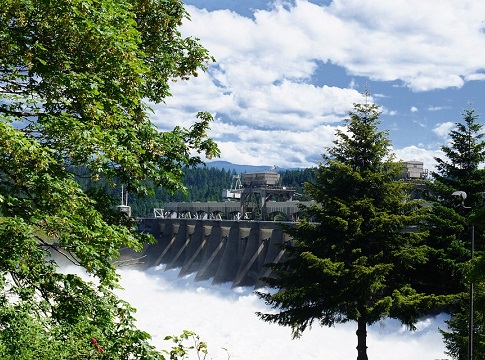
For many years, EWEB has offset the low levels of growth in demand by conserving energy. But as demand accelerates, it will outpace the levels of conservation we have historically achieved. To better understand the potential to offset future increases in electricity demand, EWEB conducted a Demand Side Potential Assessment in 2025.
Phase 1 of the study found that conservation and demand response programs could offset roughly half of that projected growth cost-effectively, making conservation one of EWEB's most valuable planning tools alongside new power sources. Programs that help customers shift energy use to off-peak hours, combined with cost-effective efficiency upgrades, could offset nearly all of the expected growth in peak demand over the same period.
Learn moreIndustrial demand and regional grid pressures
Across the northwest, electricity demand from commercial and industrial users, including data centers, is growing. This regional growth affects the broader grid that Eugene depends on, even when that demand originates elsewhere.
Eugene does not currently host major data centers, and EWEB does not control which businesses choose to locate here. But as a responsible public utility, we plan for regional reliability risks, including the impact of large energy loads on the broader northwest grid, while continuing to support the transition to clean electricity.
Our Integrated Resource Plan evaluates how to meet future energy needs reliably and affordably under a range of scenarios. Studies of local generation resources, like our University of Oregon Combined Heat and Power Generator study, are part of how we prepare for rare but possible periods of regional supply constraint, without compromising our long-term climate commitments.
Integrated Resource Planning
An Integrated Resource Plan (IRP) is a long-term planning document to identify EWEB’s energy needs and the best resource options to meet those needs. The IRP relies on modeling, analysis, and public input to provide a 20-year look at future portfolio options and identify a nearer-term (2-5 year) action plan.
EWEB completed our last IRP in 2023.
Goals of EWEB’s 2023 IRP:
1. Modernize our approach to energy resource planning to make it more robust, dynamic, routine, and useful, while developing in-house expertise.
2. Understand EWEB’s needs for energy and capacity in the future.
3. Identify least-cost, “best fit” resources.
4. Consider tradeoffs and values when developing action plans
Most importantly, this IRP includes a set of recommended actions that the utility can take in the next 2-3 years to make progress on long-term strategic goals related to EWEB’s power supply. These actions will be essential to providing the community with a least-cost power supply that meets EWEB’s policy target of providing 95% carbon-free electricity by 2030.
Read more...EWEB and UO generation study
Nearly all the time, renewable energy such as hydropower and wind is plentiful, and EWEB doesn’t need to use fossil fuel sources to meet customer demand. However, on rare occasions — particularly during the coldest winter days — electricity demand can surge while renewable output is limited. During these conditions, utilities rely on additional resources that can be turned on quickly and do not depend on weather conditions such as wind, sunlight, or water availability.
EWEB and the University of Oregon (UO) are engaged in a study that seeks to better understand if running UO’s on-site combined heat and power (CHP) generator during short periods of peak winter demand can support a cleaner, more reliable grid. The CHP generator uses natural gas to generate electricity and captures the excess heat to produce steam for campus heating, making it more efficient than conventional power plants.
Read more...Oregon Renewable Portfolio Standard
In 2007 Oregon enacted Senate Bill 838, the Oregon Renewable Energy Act (Act), which created a Renewable Portfolio Standard (RPS) that all Oregon electric utilities must follow. The purpose of the RPS is to decrease Oregon utilities reliance on fossil fuels for electric generation and increase their use of renewable energy sources.
For 2024, EWEB’s RPS portfolio obligation, after applying resource exemptions, is 45,505 MWhs. The retirement of these RECs has been completed and surplus RECs have been banked for future use or sold.
Read our 2024 Renewable Portfolio Standard Compliance ReportRelated Programs
Electric reliability projects
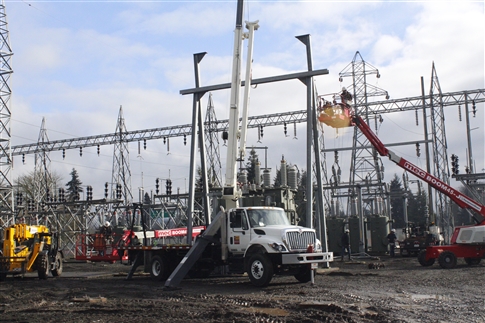
EWEB's 10-year Capital Improvement Plan for major infrastructure investments to rehabilitate, replace, and install new infrastructure will ensure we meet the current and future needs of our community, while maintaining reliable service.

Understanding peak power
Managing peak electricity demand is a critical component of achieving climate recovery goals and keeping energy affordable for all customers.
Smart meters
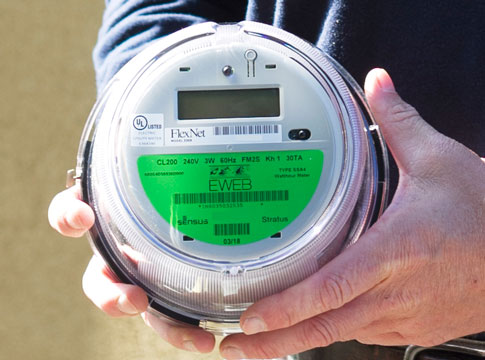
We want to provide customers with better service, build a more resilient community and create a cleaner energy future. As a part of acheiving these goals, we are upgrading our electric and water meters to smart meters.