
Questions?
If you have questions about whether you qualify for one of our programs, please email us or call 541-685-7088.
We recognize and appreciate the important role upstream landowners in the McKenzie Watershed play in the stewardship of the McKenzie River. Our drinking water source protection program offers several options designed to assist McKenzie landowners in protecting the water quality of the McKenzie River. We're also offering special programs for landowners rebuilding after the Holiday Farm Fire.
If you have been affected by the Holiday Farm Fire and looking for assistance, please visit our resources and support page.
Septic Repair and Replacement Grants (for Holiday Farm Fire properties)
Septic Maintenance Incentive
Septic System Boundary Map
Pure Water Partners
Healthy Farms Clean Water
Septic System Repair, Replacement and Construction Grants
Federal funding issued through the American Rescue Plan Act (ARPA) is available to help McKenzie River community members re-establish functioning septic systems and protect the river from pollution including bacteria, viruses, and chemicals which can harm fish, wildlife, plants and people. To leverage this funding, EWEB has partnered with Lane County and Business Oregon to replace or repair septic systems for homeowners and properties affected by the Holiday Farm Fire.
To receive Septic System Grant funding, applicants must meet the following criteria:
- The property must be located within the Holiday Farm Fire perimeter.
- Funding is now available for property owners who did not own the property at the time of the fire (September 8, 2020)
- If not completed by the property owner, septic system repairs or installation must be completed by a Licensed Onsite System Installer, certified by the DEQ.
- Completed septic projects must be inspected by Lane County, with permit status listed as final.
For residential properties, grant funding is available if the residence is:
- Primary dwelling.
- Serving as a long-term rental (not a vacation home or a vacation rental).
- Eligible landowners may qualify for up to $35,000 but actual grant amounts will be based on multiple factors:
- Type of septic system.
- Landowner income and number in household.
- Documented cost of septic system replacement or repair.
- Receipt of funding from other sources such as state, federal or utility programs.
Funding is now available for commercial properties.
Funds can be used for site assessments to determine the septic capacity of the property, site design, soil tests, etc. as well as permit fees and construction.
Note: All work must be completed by Sept 1, 2026.
* We have currently allocated all grant funding but are actively seeking additional funds. We are maintaining a waitlist and encourage McKenzie residents to apply should more funds become available.
If you have question please give us a call or email (541-685-7318, misty.fisher@eweb.org).
Septic Maintenance Incentive
EWEB's Septic Maintenance Program offers a $300 incentive to encourage homeowners close to the river to perform regular maintenance on septic systems.
Steps to Participate
If this is a rental home, please print and sign a W9 and mail to our office.
1. Determine if your property is eligible by verifying your address is located within the Septic System Boundary Map. Residential units including single-family, multi-family homes, duplex and mobile homes located within the boundary are eligible for the incentive every three years. You do not need to be an EWEB customer. Work must have been completed within six months of application.
2. Choose a DEQ-licensed and certified contractor to complete the work. Please visit the Oregon Department of Environmental Quality website to see if the contractor is eligible to perform the work.
3. Print and fill out a septic service program application. Have your contractor fill out the appropriate pages of the form once they have done the work. Mail the application, contractor certification forms, and invoice to:
EWEB Customer Solutions
4200 Roosevelt Blvd
Eugene, OR 97402
Applications can be emailed to ems.answers@eweb.org
Check out our homeowner's guide for more information about how to maintain your septic system.

Pure Water Partners
Do you own property on the McKenzie River? Pure Water Partners is a new initiative designed to reward McKenzie landowners who protect high quality land along the river, helping to protect water quality. It is a joint effort between EWEB and a number of local agencies, including the McKenzie Watershed Council, Upper Willamette Soil & Water Conservation District, US Forest Service, McKenzie River Trust, and others.
Landowners may receive annual payments, technical assistance or other incentives to participate in Pure Water Partners. The program also provides assistance to landowners who wish to engage in restoration projects on their land.
Learn More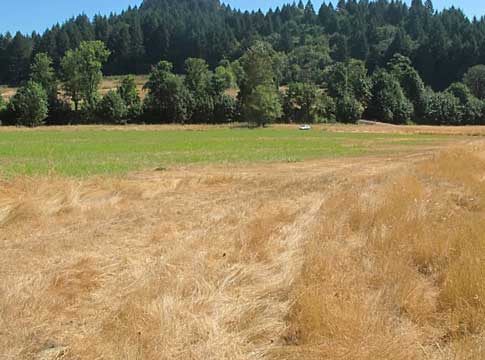
Do you own a farm in the McKenzie Watershed?
At EWEB, we recognize that farms are a critically important resource in the watershed. They:
- Produce food and other important products
- Provide a livelihood for farmers
- Are a preferred land use to subdivisions and other intensive development adjacent to the river
We have developed and participate in several initiatives designed to help farms to become more economically viable so that the land continues to be used for this purpose, rather than being sold off for development.
We seek to engage farmers and provide incentives to:
- Reduce chemical storage on farms
- Reduce chemical use by transitioning to certified organic crops or other methods
- Provide access to local markets that tend to pay more for crops
- Participate in programs designed to increase energy efficiency, incorporate renewable energy and reduce water consumption
- Participate in natural resource conservation programs or consider placing some land in conservation or working agricultural easements
Contact us to learn more.
More about our drinking water
Your drinking water quality
Access to clean water is vital to our community. That is why we work hard to deliver water that meets or exceeds all state and federal health standards.
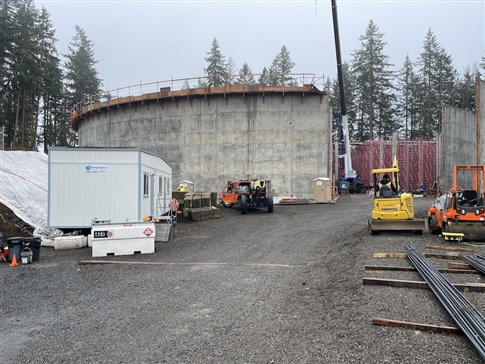
Water Reliablity Projects
We're making investments to prepare, replace and maintain our community's water system.