
Contact EWEB Human Resources
For interview accommodations, scheduling questions, or anything else related to your application, please contact EWEB Human Resources at RecruitingTeam@EWEB.org or 541-685-7552.
We know interviews can feel high stakes. This guide is here to help you prepare with confidence — at every step of the process.
About Our Interview Process
At EWEB, we use a structured, behavior-based interview format. That means our panel will ask questions about real situations from your past experience — because how you’ve approached challenges before is the best indicator of how you’ll approach them here.
Interviews at EWEB are conducted by a panel. Each panelist will be evaluating your responses based on the knowledge, skills, and qualities relevant to the role. You will have time to ask questions too — this is a two-way conversation, and we want you to learn whether EWEB is the right fit for you.
This guide walks you through how to prepare, what to expect on the day, how to use the STAR method, how to follow up, and how to request accommodations if you need them. Read through at your own pace and use what’s helpful.
Explore this webpage: Before Your Interview | During Your Interview | The STAR Method | After Your Interview | Sample Behavioral Interview Questions | Accommodations & Support
01 — Before Your Interview
The work you do before the interview makes a real difference. Here’s where to focus your preparation.
Research EWEB
EWEB is a community-owned utility providing electricity and water to Eugene, Oregon. Understanding our mission — reliable service, environmental stewardship, and community accountability — will help you connect your experience to our work and answer questions like “Why do you want to work at EWEB?” with genuine specificity.
Quick research starting points
• Visit eweb.org to learn more about our services, sustainability goals, and company culture.
• Download and review the job posting carefully — it tells you exactly what the panel is evaluating. If you need a copy of the job posting sent to you, please email Recruiting@EWEB.org.
• Consider how your experience connects to EWEB’s core work: energy, water, infrastructure, and community service
Prepare Examples from Your Experience
In order to effectively respond to interview questions, you should come prepared with specific examples from your past experience. Before your interview, think through several specific situations from your work, volunteer, educational, or community experience that demonstrate the skills listed in the job posting. Consider examples that highlight how you approached challenges, worked with others, solved problems, adapted to change, or achieved results. Specific examples help us better understand your experience and potential contributions.
Write down 5 - 7 stories and practice telling them out loud. Your examples can come from any area of your life where you’ve applied relevant skills. See the STAR section below for how to structure them.
What makes a strong example?
• It’s specific: a real situation, not a general statement
• It focuses on what you did — your own actions and decisions
• It has a clear outcome, even if the outcome was a lesson learned
• It’s relevant to the kind of work described in the job posting
Prepare Your Own Questions
Every EWEB interview includes time for you to ask questions. This is a real opportunity — not just a formality. Thoughtful questions signal genuine interest and help you find out whether this role is right for you.
Questions worth considering
• What does success look like in this role in the first 90 days?
• How does this team collaborate with other departments at EWEB?
• What are the biggest challenges someone in this position typically navigates?
• How would you describe EWEB’s approach to professional development?
Logistics & Practical Preparation
- Check your confirmation email for logistics. It will include the interview format (in person or virtual) and location details (office address, video link, or phone number you’ll be called at).
- For in-person interviews, plan your route in advance. EWEB has multiple sites across Eugene and Springfield. Allow enough travel time to arrive 10 - 15 minutes early to the address listed in your interview confirmation email.
- For virtual interviews, test your audio and video at least 15 minutes before the start time. You will be required to turn your video on for all virtual EWEB interviews. Find a quiet, well-lit space where you are unlikely to be interrupted and test your audio and video before the interview to prevent any potential delays.
- Bring what helps you focus. A notepad and pen are always welcome — it is fine to jot notes or write down a question before answering.
- Do what helps you prepare. Whether that is reviewing your notes, taking a walk, or deep breathing — use whatever helps you feel calm and ready.
02 — During Your Interview
Here’s what to keep in mind once the interview begins.
Listen Fully, Then Answer
Let each question finish before you start forming your answer. If you need a moment to think, take it — that’s a sign of thoughtful communication, not hesitation. If a question is unclear, it’s always appropriate to ask for clarification: “Could you say a bit more about what you’re looking for there?”
Be Specific
EWEB panel members are listening for concrete examples. Avoid general statements like “I’m a great communicator” and instead tell the story that demonstrates it. The STAR method (below) is your best tool for this.
Manage Your Time in Responses
Most behavioral answers work well at 1 - 2 minutes. If you feel yourself going long, it’s fine to say, “I’ll wrap up there — happy to share more if it’s useful.” Panelists will ask follow-up questions if they want more detail.
Bring Your Whole Experience
EWEB values candidates with a range of backgrounds. Your experience doesn’t need to come exclusively from traditional workplaces — volunteer work, community leadership, caregiving, project-based learning, and other life experiences are all valid sources of examples when they demonstrate relevant skills.
EWEB panels are looking for genuine communication — not a performance. Focus on giving clear, honest answers and engaging with the conversation. You don’t need to project a particular persona; the goal is for us to understand how you think and what you’ve accomplished.
03 — The STAR Method
Most EWEB interview questions are behavioral — they ask you to describe a time you did something. The STAR method is a proven framework for answering these questions in a way that’s clear, specific, and compelling.
|
S — Situation Set the scene. Briefly describe the context: where you were, what your role was, and what was happening. Keep it concise — one or two sentences. |
T — Task Define the challenge or goal. What needed to happen? What was your specific responsibility in that situation? |
|
A — Action This is the most important part. Describe what you personally did — your specific decisions, steps, and contributions. Use “I,” not “we.” |
R — Result Close with the outcome. What happened as a result of your actions? Numbers and specifics help. If the result was a lesson learned, that counts too. |
STAR in Action
Sample question: Tell me about a time you had to communicate important information clearly under pressure.
Example STAR Response:
S — SITUATION: I worked as a customer service representative for an internet service provider, and a customer called in upset about a bill that was significantly higher than usual.
T — TASK: I needed to identify what had caused the increase and explain it to the customer clearly, while keeping the conversation calm and productive.
A — ACTION: I reviewed their account and found that they had exceeded their monthly data limit, which had triggered overage charges — something that had not happened on their plan before. I explained how data usage works and what had likely driven the spike. I also walked them through an alternative plan with unlimited data that would cost less per month than their current plan plus the overage fees.
R — RESULT: The customer agreed to switch plans, which resolved both their immediate frustration and their underlying concern about unpredictable bills. They seemed much more calm than when the call started, and confirmed that I addressed all of their concerns.
💡 Tips for STAR answers
• Vary your examples across different situations — don’t rely on a single project for every answer.
• Use recent examples when you can, but older examples are fine if they’re the most relevant.
• If something didn’t go as planned, include what you learned — panels value self-awareness.
• Practice out loud. Your answers will feel more natural and be easier to remember.
04 — After Your Interview
Reflect on What You Learned
After the interview, take a few notes while the conversation is fresh:
- What questions came up that you felt well-prepared for?
- Were there any questions that surprised you? How might you approach them next time?
- What did you learn about the role and EWEB that helps you decide if this is the right fit?
Regardless of outcome, every interview is useful practice. The preparation you build now will help you in future interviews too.
Next Steps
EWEB’s HR team will follow up with you about next steps and timelines. If you have questions about where you are in the process, it’s appropriate to reach out to your HR contact for an update.
05 — Sample Behavioral Interview Questions
To help you practice using the STAR method, consider how you’d respond to some of the questions below.
Important: These are example questions only, and not necessarily the exact questions you can expect to hear during your interviews. Still, these Core Competencies (along with the Leadership Effectiveness competency for leadership roles only) are expectations that EWEB evaluates for all roles, so you can expect that you’ll get a few questions on these topics in addition to the role-specific competencies listed in the job posting.
Business Effectiveness
Demonstrates the knowledge, skills, judgment, and problem-solving abilities needed to achieve quality results. Examples include technical proficiency, critical thinking, sound decision-making, adaptability, and effective use of resources.
- Describe a situation that you encountered at work where you recognized that the current course of action was faulty or would produce unexpected problems. What led you to that conclusion, and what action did you take?
- Tell us about a time when you used data to solve a problem or support a decision. How did you analyze the information and communicate your findings, and what was the outcome?
- Tell us about a time when you had to adjust your approach because the original plan was not working. What did you change, what resources did you use, and what was the outcome?
Interpersonal Effectiveness
Builds positive and productive relationships through effective communication, collaboration, customer service, and respectful interactions. Demonstrates self-awareness, professionalism, cultural awareness, and responsiveness to feedback.
- Tell us about a time when you worked with a co-worker or customer who had a different perspective or communication style. How did you adapt your approach to build understanding and work effectively together?
- Tell us about a time when you had to adjust your communication or work style to collaborate effectively with someone else. What prompted the change, and what was the outcome?
- Describe a time when you contributed to a team or project. What went well, and what challenges did you encounter? Is there anything you would do differently next time?
Personal Effectiveness
Demonstrates personal responsibility, initiative, adaptability, and accountability. Manages time and priorities effectively, follows policies and procedures, maintains attention to detail, and contributes to a safe and productive work environment.
- Tell us about a time when something didn't go as planned and you were responsible for making it right. What happened, what did you do, and what was the outcome? Tell us about a time that you observed a safety concern or potential risk during your work. What action did you take?
- Tell us about a time when you had competing priorities and couldn't accomplish everything by when it was due. How did you decide what to do first, and what was the result?
Leadership Effectiveness
Leadership roles only; Influences and supports others to achieve shared goals and organizational success. Demonstrates leadership through planning, communication, coaching, accountability, resource management, employee development, and fostering a positive and inclusive work environment.
- Describe a time when you provided constructive feedback to an employee whose performance or behavior needed improvement. How did you ensure the conversation was respectful and productive, and what happened afterward?
- Describe a situation where you recognized that a different leadership approach would help your team be more successful. What did you do, and what did you learn?
- Describe a time you have been the champion of a considerable change initiative. Be specific about your individual role and describe the actions you took to help your team embrace or accept the change.
06 — Accommodations & Support
EWEB is committed to an interview process that gives every candidate a fair opportunity to demonstrate their qualifications. If there is anything we can do to support your participation in the interview — such as allowing additional time, adjusting the format, or addressing any other access needs — please let us know.
You can request accommodations by contacting EWEB’s HR team prior to an interview. Requests are handled confidentially and will not affect how your candidacy is evaluated.
Questions about the process? Reach out to us at any time — we’re here to help.
Contact EWEB Human Resources
For interview accommodations, scheduling questions, or anything else related to your application, please contact EWEB Human Resources at 541-685-7552 or email RecruitingTeam@EWEB.org.
Learn more about EWEB
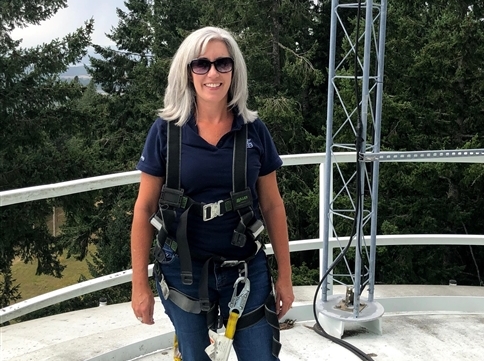
Meet our team
We're proud of our people! We don't just work here; we also live here and raise our families here.

Your EWEB Commissioners
City of Eugene residents elect five commissioners to four-year terms to form the EWEB Board of Commissioners. The elected Board is responsible for overall governance of the utility.

EWEB Newsroom
Find articles on the latest in energy efficiency and water conservatoin, read updates on EWEB projects and initiatives, and more.